⚡FIELD OPS DOSSIER: UNIT GEN-05 “THE ARC SENTINEL”
Division: General Fuse Corps — Emergency Response
Height: 5.5 in
Status: Active
Serial: GEN-05
Origin Classification: Utility Electrical Salvage / Phase I
🔌I. Origins: The Fuse That Refused to Fail
GEN-05 began life not as a robot, but as a General Fuse emergency service tin carried by field electricians from the late 1950s through the early 1970s. These tins held spare cartridge fuses for rapid-response crews — the ones dispatched when hospitals, factories, or whole neighborhoods blacked out.
Unlike other tins from the era, this one shows signs of extreme field use:
This was a tin that lived on the front lines — clipped to belts, tossed in vans, brought into boiler rooms and storm-damaged substations.
Its crews used to refer to it as
“The Lucky Tin.”
Every team that carried it reported fewer blown circuits and faster recoveries.
⚙️ II. Dormancy and Rediscovery
When newer plastic kits replaced metal tins in the late 70s, the Lucky Tin was retired, boxed, and eventually lost in the storage crawlspace of an old public works building.
Decades later, a Field Ops scavenger unit clearing old electrical stockpiles found it wedged behind a steel conduit rack. Inside were:
The serial number became the bot’s designation.
🔧 III. Reconstruction: The Arc Frame
R3BOTS engineers rebuilt GEN-05 using:
Precision steel stabilizer legs for quick deployment
Red insulated connectors to replicate the tin’s original emergency fittings
Dual-terminal arms capable of gripping, rerouting, and isolating live circuits
A central fuse-core spine, repurposed from an old surge protector
The moment current flowed through the assembly, GEN-05’s terminals snapped to attention, as if remembering a job long overdue.
Its first recorded sensor output in the lab was simple: “Load stable.”
⚡IV. Activation: The First Field Test
During its calibration trial, engineers simulated a line fault by overdriving a test grid.
Most units would flinch, hesitate, or wait for directives.
GEN-05 did the opposite.
It leaned forward, arms angled, and created its own manual bypass using the lab’s auxiliary leads.
It stabilized the circuit one full second faster than its projected response profile.
The lab’s diagnostic logs marked the event as:
“Autonomous Arc Suppression Behavior — Unexpected.”
That was enough to earn GEN-05 a place in the General Fuse Corps.
🔥 V. Deployment: Emergency Response Division
GEN-05 now serves as a frontline responder for electrical emergencies:
Its red connectors glow faintly during high-stress service calls, a phenomenon Field Ops techs say has no engineering explanation — and every historical explanation.
Whenever a critical system is seconds from failure, GEN-05 is known to step forward first.
Its creed is etched along the underside of its baseplate:
“Break the arc. Restore the line.”
R3BOTS FIELD OPS MOTTO
REPURPOSE. REBUILD. REINVENT.
⚡FIELD OPS DOSSIER: UNIT GEN-05 “THE ARC SENTINEL”
Division: General Fuse Corps — Emergency Response
Height: 5.5 in
Status: Active
Serial: GEN-05
Origin Classification: Utility Electrical Salvage / Phase I
🔌I. Origins: The Fuse That Refused to Fail
GEN-05 began life not as a robot, but as a General Fuse emergency service tin carried by field electricians from the late 1950s through the early 1970s. These tins held spare cartridge fuses for rapid-response crews — the ones dispatched when hospitals, factories, or whole neighborhoods blacked out.
Unlike other tins from the era, this one shows signs of extreme field use:
This was a tin that lived on the front lines — clipped to belts, tossed in vans, brought into boiler rooms and storm-damaged substations.
Its crews used to refer to it as
“The Lucky Tin.”
Every team that carried it reported fewer blown circuits and faster recoveries.
⚙️ II. Dormancy and Rediscovery
When newer plastic kits replaced metal tins in the late 70s, the Lucky Tin was retired, boxed, and eventually lost in the storage crawlspace of an old public works building.
Decades later, a Field Ops scavenger unit clearing old electrical stockpiles found it wedged behind a steel conduit rack. Inside were:
The serial number became the bot’s designation.
🔧 III. Reconstruction: The Arc Frame
R3BOTS engineers rebuilt GEN-05 using:
Precision steel stabilizer legs for quick deployment
Red insulated connectors to replicate the tin’s original emergency fittings
Dual-terminal arms capable of gripping, rerouting, and isolating live circuits
A central fuse-core spine, repurposed from an old surge protector
The moment current flowed through the assembly, GEN-05’s terminals snapped to attention, as if remembering a job long overdue.
Its first recorded sensor output in the lab was simple: “Load stable.”
⚡IV. Activation: The First Field Test
During its calibration trial, engineers simulated a line fault by overdriving a test grid.
Most units would flinch, hesitate, or wait for directives.
GEN-05 did the opposite.
It leaned forward, arms angled, and created its own manual bypass using the lab’s auxiliary leads.
It stabilized the circuit one full second faster than its projected response profile.
The lab’s diagnostic logs marked the event as:
“Autonomous Arc Suppression Behavior — Unexpected.”
That was enough to earn GEN-05 a place in the General Fuse Corps.
🔥 V. Deployment: Emergency Response Division
GEN-05 now serves as a frontline responder for electrical emergencies:
Its red connectors glow faintly during high-stress service calls, a phenomenon Field Ops techs say has no engineering explanation — and every historical explanation.
Whenever a critical system is seconds from failure, GEN-05 is known to step forward first.
Its creed is etched along the underside of its baseplate:
“Break the arc. Restore the line.”
R3BOTS FIELD OPS MOTTO
REPURPOSE. REBUILD. REINVENT.

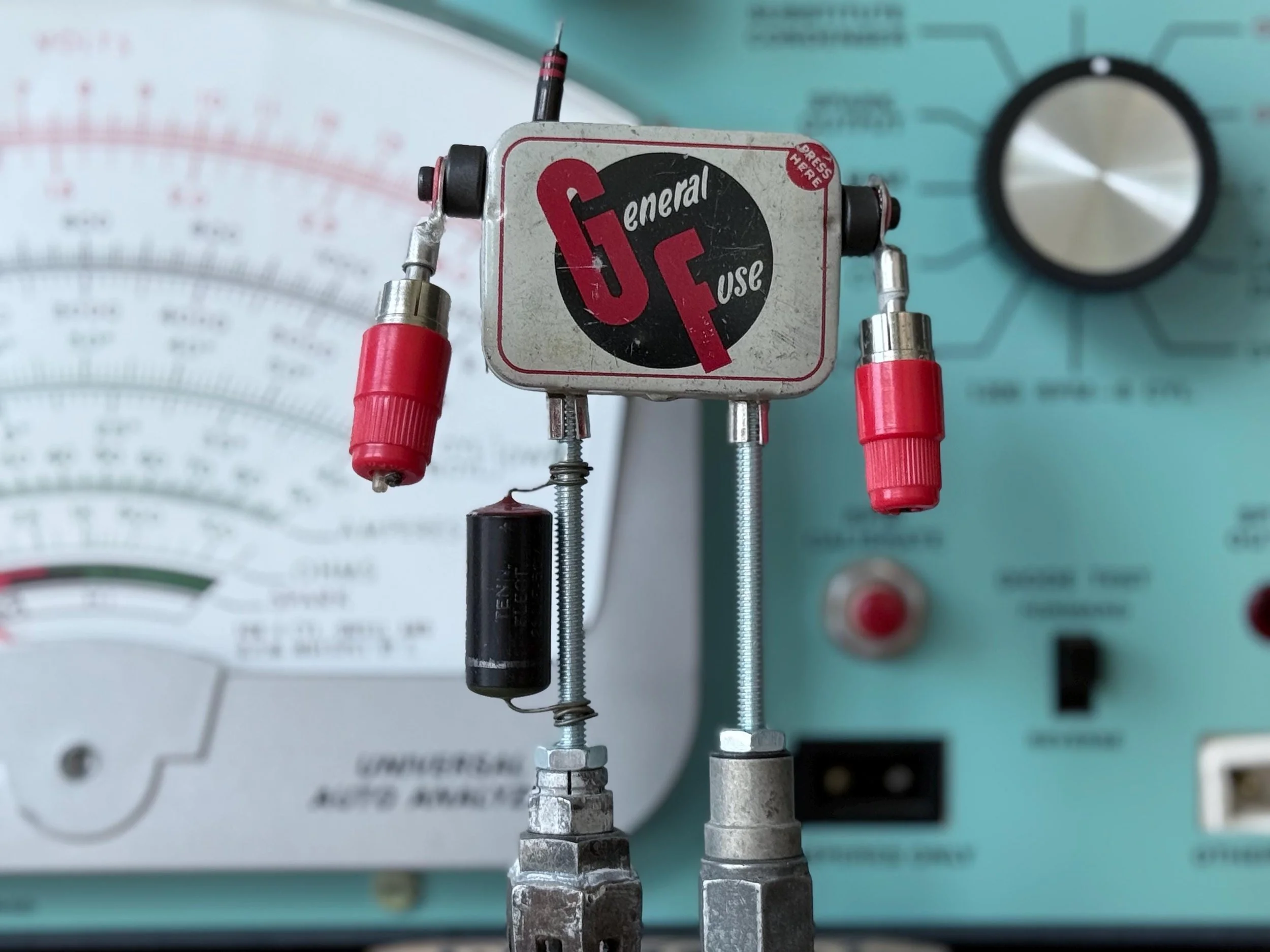 Image 1 of 6
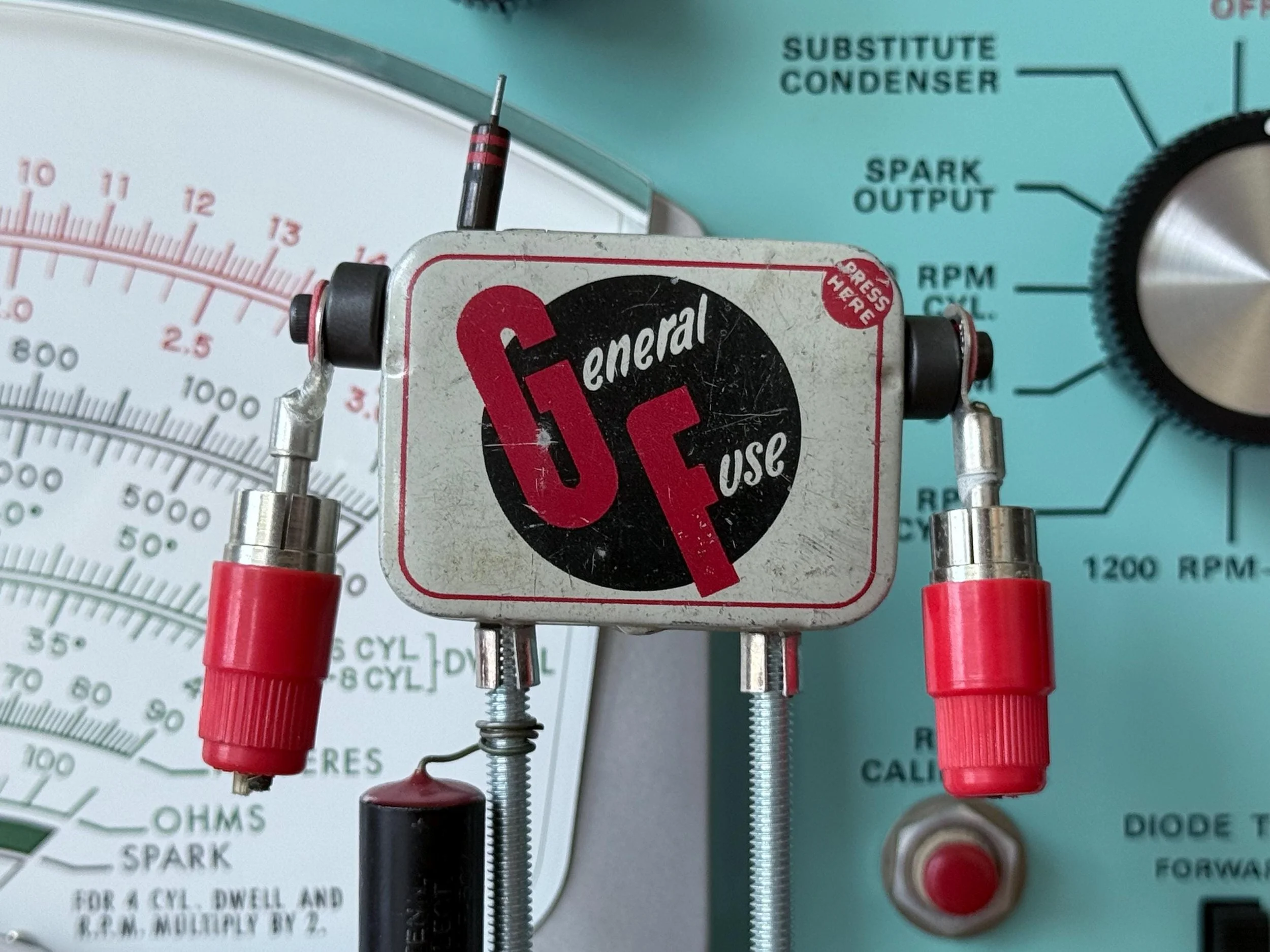 Image 2 of 6
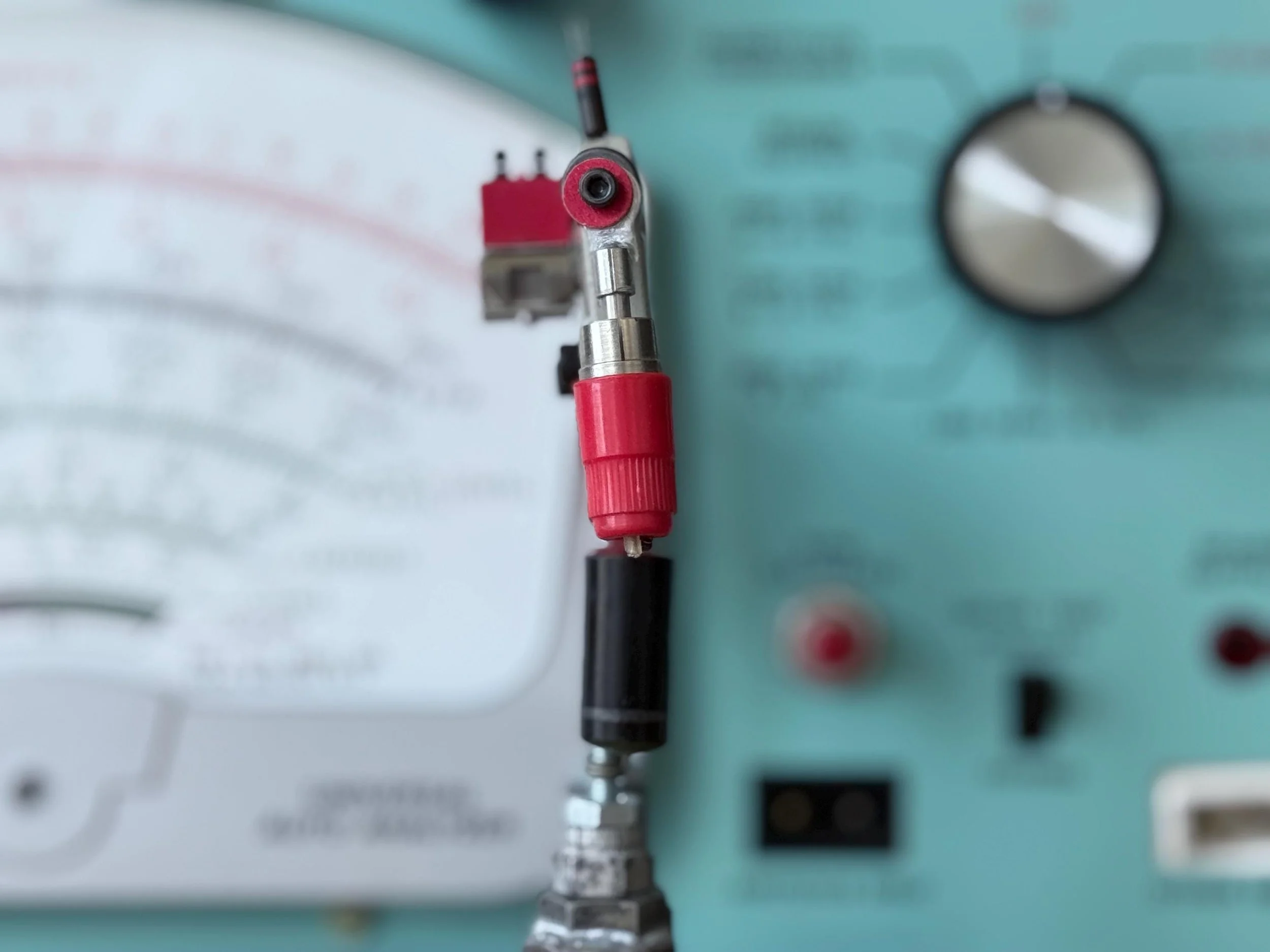 Image 3 of 6
 Image 4 of 6
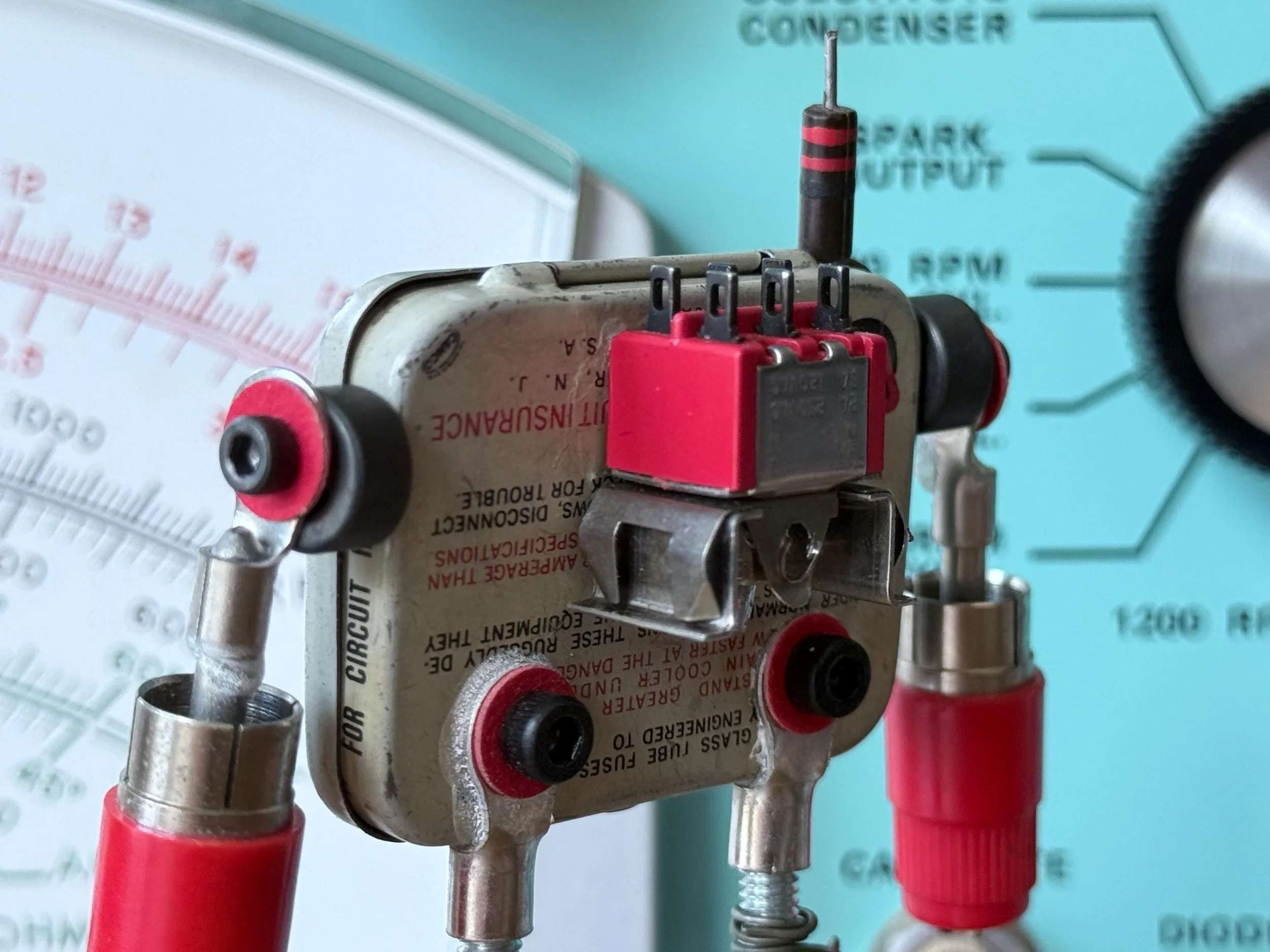 Image 5 of 6
 Image 6 of 6